
Your CEO declined another conference invitation this week.
Not because she doesn’t value professional development. Not because the content isn’t relevant. Because she doesn’t have 60 minutes to sit through a presentation she could have absorbed as a three-paragraph memo. This is an easy fix for corporate workshops in Toronto.
The hour-long keynote is dying. Across Toronto’s corporate landscape, leadership teams are demanding different formats—and the organizations getting this right are investing more in professional event planning, not less.
Here’s what’s actually happening, why it matters, and what it means for your next corporate gathering.
The Attention Span Reality: What Research Actually Shows
Let’s start with what’s real.
Dr. Gloria Mark, a researcher at the University of California, Irvine, has been measuring attention spans for two decades. In 2004, the average person could focus on a single screen for two and a half minutes. By 2016, that number had dropped to 47 seconds.
That’s not about goldfish comparisons or clickbait statistics. It’s about fundamental changes in how we process information in an environment designed to fragment our focus.
For corporate workshops in Toronto and beyond, this creates a straightforward challenge: traditional presentation formats assume an attention capacity most executives simply don’t have anymore.
But here’s what matters more than the problem: understanding what executives will make time for when they won’t sit through passive presentations.

What TED Figured Out (And Why 18 Minutes Matters)
TED Talks didn’t arbitrarily choose 18 minutes as their time limit. They tested it. According to Chris Anderson, TED’s curator, 18 minutes is “short enough to hold people’s attention, including on the internet, and precise enough to be taken seriously. But it’s also long enough to say something that matters.”
Neuroscience backs this up. Researchers at Texas Christian University found that after about 18 minutes, audiences experience what they call “cognitive backlog”—the brain simply can’t process more information without a break. Like asking someone to hold increasing weight, eventually they’ll drop everything.
What’s fascinating: this isn’t new knowledge. Lincoln’s Gettysburg Address was three minutes. Kennedy’s “we choose to go to the moon” speech ran 17 minutes. Steve Jobs’ Stanford commencement address clocked in at 15 minutes.
These leaders understood what we are just now realizing: brevity isn’t about dumbing things down. It’s about respecting how humans actually learn.
For organizations planning corporate workshops in Toronto, leadership conferences, galas, and other corporate events, this creates an opportunity: the shift away from hour-long keynotes opens space for formats that require significantly more sophisticated event planning expertise.
What Executives Actually Will Make Time For
Here’s the counterintuitive part: executives aren’t rejecting gatherings. They’re rejecting passive consumption disguised as professional development.
They will absolutely invest time in experiences that respect their scarcity and deliver tangible value. What changed is what those experiences look like.
They’ll Choose Interactive Problem-Solving
Not “here’s how we solved this challenge” presentations. Actual working sessions where participants collaborate on strategic problems they’re currently facing.
Example format for corporate workshops in Toronto:
Rather than a 60-minute keynote on digital transformation, run a 90-minute facilitated workshop where leadership teams map their own transformation challenges and develop action plans together.
The time investment is higher. But so is the value—and the need for professional facilitation- the need for corporate workshops in Toronto done keeping this in mind.
They’ll Choose Peer Dialogue Over Expert Monologue
Executives get plenty of expert content through articles, podcasts, and reports. What they can’t replicate alone: structured conversation with peers facing similar challenges.
Example format:
Executive roundtables of 25-40 leaders, professionally moderated around specific strategic questions. No presentations. Just facilitated dialogue that generates insights none of the participants could have reached independently.
This format demands more planning expertise, not less. Curating the right participants, crafting questions that drive meaningful dialogue, managing group dynamics—none of this is simple logistics.
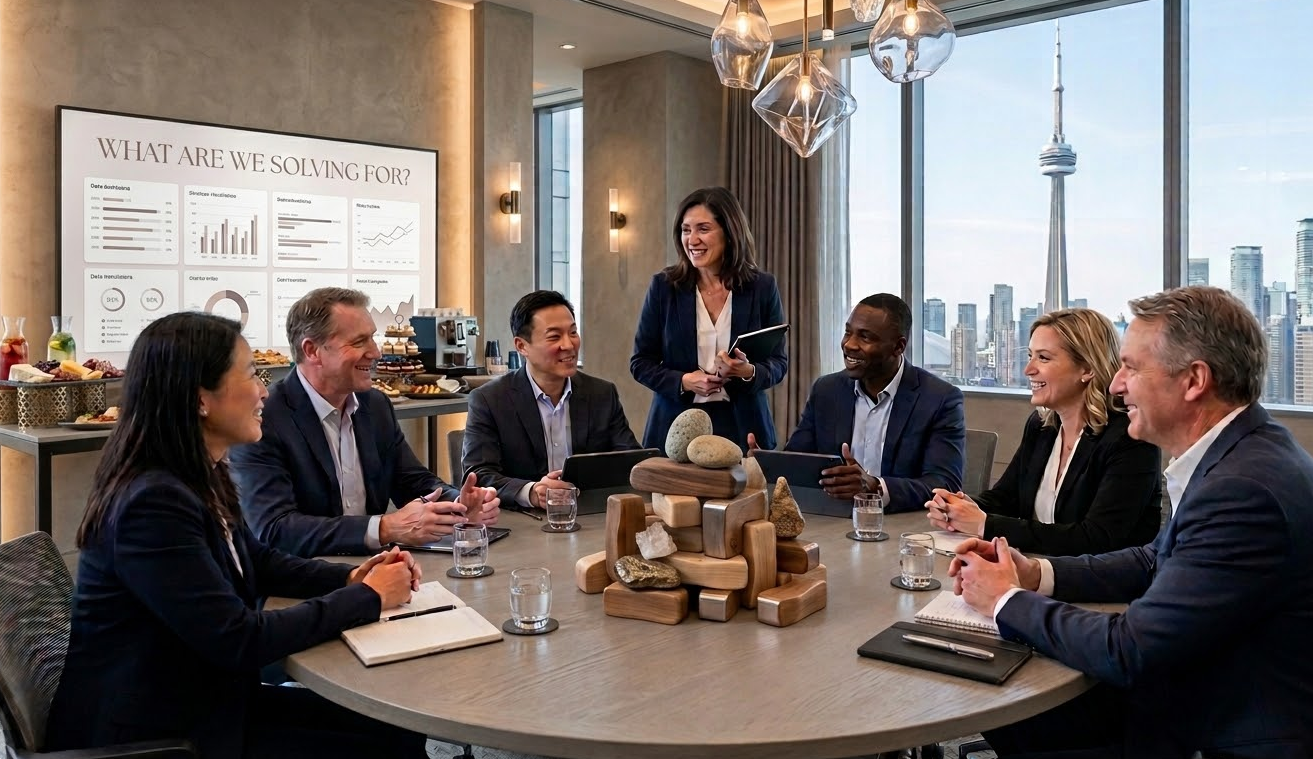
They’ll Choose Action-Oriented Experiences
Events where decisions happen, not just discussion.
Leadership offsite where the team doesn’t just talk about strategy—they build it together, make decisions, and leave with defined next steps. Client appreciation events that aren’t receptions with speeches, but collaborative experiences that deepen business relationships through shared problem-solving.
What this requires:
Significantly more sophisticated event design. You’re not booking a speaker and managing A/V. You’re architecting experiences that balance intensity with reflection, create psychological safety for difficult conversations, and translate insights into actionable outcomes.
This is why professional corporate event planning becomes more valuable as formats evolve, not less.
The Formats Toronto Organizations Are Choosing
At illuminate EVENTS, we’re seeing consistent patterns in what leadership teams actually want when they reject traditional conference formats.
TED-Length Expert Provocations (15-20 Minutes)
Short, punchy expert input designed to frame a challenge or introduce a perspective—followed immediately by 40 minutes of facilitated discussion.
Why this works:
You get expert insight without cognitive overload. The real value emerges in the dialogue that follows, where participants apply the framework to their specific context.
Corporate Workshops-Based Corporate Retreats
Instead of “attend our conference and listen to five speakers,” organizations are running corporate workshops in Toronto where participants work through strategic challenges together.
Recent example: A Toronto technology company replaced their traditional annual planning conference with a two-day workshop format. Rather than presentations about market trends, they designed collaborative sessions where cross-functional teams built their go-to-market strategy together.
Result: They left with actual decisions made and clear ownership, not just slides to review.
What this requires:
Professional facilitation that keeps 50 people productively working toward outcomes. Experience design that balances individual reflection, small group collaboration, and full group synthesis. Strategic pacing so participants don’t burn out from sustained high-engagement formats. This is what corporate workshops in Toronto should work towards to move the needle.

Quarterly Micro-Event Series
Rather than one annual two-day conference, leadership teams are running quarterly half-day strategic sessions.
The math that matters:
Four focused four-hour gatherings create more sustained engagement than one exhausting two-day event. Participants can actually implement insights between sessions. Strategic thinking becomes ongoing practice, not annual ritual of a good to attend corporate workshop in Toronto.
For event planning:
This means four events to plan instead of one. More touchpoints, more opportunities to refine based on feedback.
Hybrid Corporate Workshops In Toronto That Actually Work
Not “conference with a livestream.” Genuinely designed dual-audience experiences.
When we plan hybrid corporate events, we’re creating two simultaneous experiences that interact—not broadcasting one audience to another. Virtual participants aren’t passive viewers; they’re active contributors through breakout discussions, collaborative tools, and strategic participation design.
It is essentially planning two events that need to feel equally valued. This requires technical sophistication, facilitation expertise that spans both audiences, and experience design that creates genuine interaction across the divide.
Why This Shift Requires More Event Planning Expertise
Here’s what organizations often miss when they think “shorter formats mean simpler planning.”
Traditional conference planning:
- Book keynote speakers
- Coordinate A/V logistics
- Manage catering and venue
Modern corporate workshop-based events in Toronto:
- Design interactive experiences with clear learning outcomes
- Facilitate difficult strategic conversations among senior leaders
- Create psychological safety so genuine dialogue happens
- Manage group energy and dynamics in real-time
- Balance structured content with emergent insights
- Ensure every participant contributes meaningfully
- Translate insights into actionable commitments
- Adapt the agenda as group needs become clear
This is exponentially more complex than traditional event logistics. It’s why professional corporate event planning becomes more valuable as formats evolve.
The organizations trying to DIY these new formats quickly discover that “interactive” looks deceptively simple until you’re in a room with 40 executives expecting transformation, not just information.

How illuminate EVENTS Designs for the Attention Reality
When Toronto organizations come to us saying “our annual conference needs to evolve,” here’s our approach:
We Start With Desired Outcomes
Not “what should the agenda look like?”
What needs to change because this gathering happened? What strategic decisions need to be made? What relationships need to deepen? What alignment do you need that you don’t have now?
Working backward from clear outcomes determines format. Sometimes that’s a workshop. Sometimes it’s facilitated roundtables. Sometimes it’s a hybrid format with both.
But it’s never “let’s book some keynote speakers and call it a conference.”
We Design for Energy Management
Even highly engaging formats can’t sustain four hours of intensity. Human brains don’t work that way.
When we plan corporate workshops in Toronto, we’re deliberately pacing:
- High-energy collaborative sessions
- Individual reflection time
- Small group dialogue
- Full group synthesis
- Strategic breaks that aren’t just logistics
Getting this rhythm right is the difference between participants who leave energized and aligned, versus participants who leave exhausted and overwhelmed.
We Facilitate, Don’t Just Coordinate
Our role extends beyond event logistics into active facilitation. When difficult strategic conversations emerge during leadership retreats, we’re not observers managing the schedule—we’re facilitators helping the group navigate complexity productively.
This is the expertise traditional event coordination doesn’t require. It’s also why these evolved formats command higher investment: the value isn’t in booking venues and managing timelines. It’s in creating the conditions where genuine strategic work can happen.
What This Means for Your Next Corporate Event
If you’re planning a leadership conference, corporate retreat, or client appreciation gathering in Toronto or across the GTA, here are the questions worth asking:
How much time are participants listening versus doing?
If the ratio is heavily skewed toward passive consumption, you’re fighting an uphill battle against attention span reality.
Could any planned presentation be condensed to 15-20 minutes?
If the answer is yes (and it usually is), what would you do with the reclaimed time? Facilitated discussion? Working sessions? Peer dialogue?
Where could decisions actually happen at the event, not after it?
This is the shift from information delivery to strategic work. It’s also what makes corporate events genuinely valuable to time-strapped executives.
Do you have facilitation expertise, or just coordination capability?
Interactive formats don’t run themselves. The organizations succeeding with evolved formats are investing in professional facilitation, not hoping DIY approaches work with senior audiences.
The Bottom Line: Formats Changed, Value Increased
The 60-minute keynote is dying. That’s an opportunity because what’s replacing passive presentations requires significantly more expertise: experience design that creates genuine engagement, facilitation that navigates complex group dynamics, strategic pacing that manages cognitive load, and outcome-focused planning that translates gathering time into measurable business value.
Corporate workshops in Toronto organizations invest in aren’t cheaper, simpler versions of traditional conferences. They’re more sophisticated, higher-value experiences that command appropriate investment precisely because they deliver outcomes passive formats cannot.
At illuminate EVENTS, we don’t help organizations plan shorter events. We help them plan smarter ones—experiences that respect attention span reality while creating the strategic value that makes gathering worthwhile.
Because executives aren’t rejecting corporate events. They’re rejecting formats that waste their scarcest resource: focused attention.
Give them experiences that earn that attention, and they’ll not only show up—they’ll engage fully, contribute meaningfully, and leave with insights and relationships that drive genuine business impact.
Ready to Evolve Your Corporate Event Format?
At illuminate EVENTS, we specialize in designing corporate workshops in Toronto, leadership retreats, and interactive gatherings that executives actually want to attend.
From TED-length provocations with facilitated dialogue to multi-day workshop-based conferences that drive strategic decisions, we bring professional experience design to formats that respect how modern leaders actually learn and engage.
Explore our approach to corporate event planning and discover why Toronto organizations choose us when traditional formats no longer deliver the outcomes they need.
- Corporate Workshop In Toronto-based retreats
- Leadership conferences with interactive formats
- Executive roundtables and facilitated dialogue
- Hybrid events designed for dual-audience engagement
- Strategic offsites where decisions happen, not just discussion
Let’s design your next corporate gathering.
One that respects attention span reality. One that delivers measurable outcomes.
Contact: info@illuminateevents.ca | +1 (647) 405-2808
illuminate EVENTS is a Toronto-based corporate event planning company specializing in corporate workshop-based formats, interactive corporate experiences, and strategic gatherings designed for how modern executives actually learn. We help organizations move beyond presentation-heavy conferences to facilitated experiences that drive genuine business outcomes across the GTA.